An information resource for the Commonwealth of Kentucky
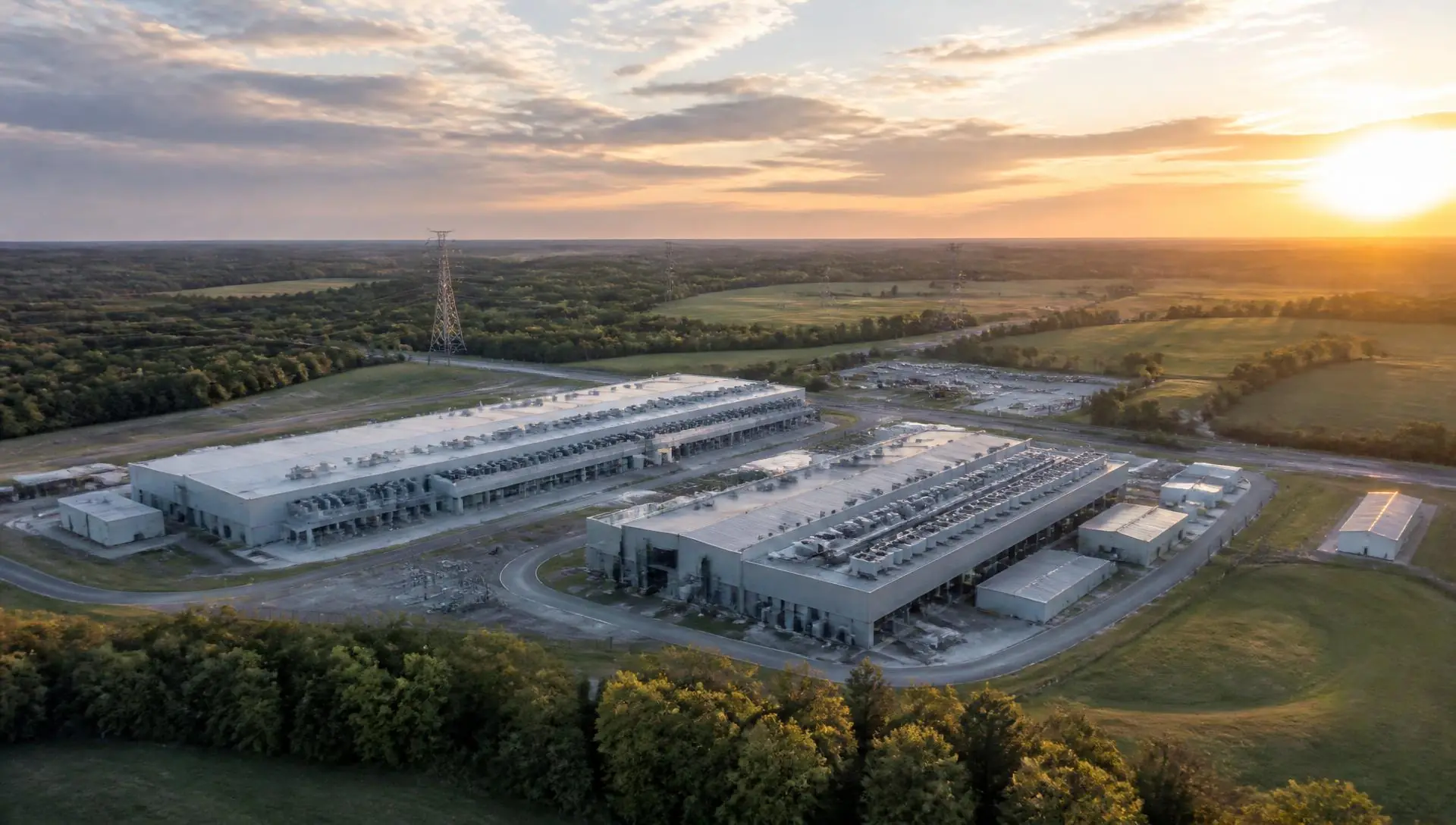
Aerial view of a modern data center campus beside Kentucky farmland and transmission lines

Kentucky For Data Centers

The future of data
is coming to Kentucky.

Data centers power the technology we use every day — from cloud computing and streaming to artificial intelligence and advanced manufacturing.

As billions of dollars in digital infrastructure investment comes to Kentucky, communities deserve clear information about the opportunities, challenges, and protections that come with it.

Why here, why now

Kentucky Is Emerging as a Data Center Destination

Site selection for very large computing campuses is a process of elimination. Kentucky clears more of the filters than it did a decade ago — which explains the interest, though not whether any single project is right for any single county.

Central U.S. location

Kentucky sits within a day's drive of a large share of the U.S. population, which matters for construction logistics, equipment delivery and staffing.

Available industrial land

Legacy industrial parcels, existing industrial parks and reclaimed mine acreage offer large contiguous sites without converting productive farmland.

Energy infrastructure

Existing high-voltage transmission corridors and generation sites give some Kentucky locations a credible path to large-scale power.

Fiber connectivity

Long-haul fiber routes crossing the Commonwealth support the diverse, low-latency connectivity large facilities require.

Transportation corridors

I-65, I-75 and I-64, plus rail, river and air freight, reduce the cost and risk of moving heavy equipment during construction.

Industrial workforce

Kentucky's manufacturing base has produced deep electrical, mechanical and maintenance skills that transfer directly to data center operations.

Competitive operating environment

Site readiness programs and an established economic development apparatus can shorten the path from evaluation to decision.

Access to major markets

Proximity to Cincinnati, Nashville, Indianapolis, St. Louis and the Southeast puts Kentucky inside several regional demand footprints at once.

Kentucky Data Center Tracker

Data Centers Across Kentucky

A running record of projects and site activity across the Commonwealth. Entries show only what appears in filings, public agendas or on-the-record announcements — fields we cannot source are marked 'Not disclosed' rather than estimated.

American Energy Hub — Paducah Site — Paducah, McCracken County (Proposed)TeraWulf — Kentucky Site Evaluation — To be confirmed, To be confirmed (Proposed)Northern Kentucky Data Center Corridor — Northern Kentucky, Boone County (Operating)Louisville Metro Digital Infrastructure Interest — Louisville, Jefferson County (Planning)Eastern Kentucky Legacy Energy Sites — Eastern Kentucky, Multiple counties (Proposed)TenKey Data Center Campus, Franklin — Franklin, Simpson County (Planning)Cave City Data Center Proposal — Cave City, Barren County (Proposed)South Central Kentucky Site Interest — Bowling Green, Warren County (Proposed)
ProposedPlanningApprovedUnder ConstructionOperating

Proposed

American Energy Hub — Paducah Site

County
McCracken County
City
Paducah
Developer
Coalition led by Brookfield and NextEra Energy, in partnership with the U.S. Department of Energy
Est. investment
$100 billion (announced, privately funded)
Est. capacity
4.6 GW of dedicated generation; reported to host more than 1.2 GW of AI compute
Jobs
Approx. 8,000 construction and 600 permanent (announced)
Learn more

Straight answers

The Questions Kentuckians Are Asking

We do not route around the hard questions. Each one leads to a detailed page that states the concern, what the evidence shows, what depends on the specific project, and what responsible development looks like.

Ratepayer protection

Growth Should Pay Its Own Way.

One of the most important issues surrounding data center development is making sure residential customers and existing businesses are not forced to subsidize the infrastructure required by large new electrical loads.

Utility ratemaking rests on cost causation: the customer that causes a cost should carry it. For very large loads, that principle is implemented through dedicated tariffs and special contracts — and those documents are public.

  • Kentucky Public Service Commission review
  • EKPC data center power tariff structures
  • Dedicated generation requirements
  • Infrastructure cost allocation
  • Special contracts for large loads
  • National ratepayer protection initiatives

How cost responsibility should flow

Step 1

Data center

A very large new electrical load requests service.

Step 2

Power requirements

Generation and firm capacity must be secured.

Step 3

Infrastructure

Transmission, substation and interconnection are built.

Step 4

Data center pays cost

Minimum demand charges, contract term, collateral and exit provisions.

Versus residential ratepayers: where those terms are missing or unenforced, the same costs can be spread across everyone's bill. That is why the tariff — not the press release — is the document that matters.

Water & technology

Not Every Data Center Is Built the Same.

New technology can change the water equation.

Cooling design — not building size — drives water consumption. Two facilities with identical footprints can differ by an order of magnitude depending on the system chosen. That choice is made at design time, and it can be a condition of approval.

Closed-loop cooling
Recirculates a fixed volume with limited makeup water.
Air cooling
Uses very little water and more electricity.
Hybrid cooling
Switches modes based on outdoor conditions.
Water-efficient systems
Direct-to-chip liquid cooling for high-density AI hardware.
Site-specific engineering
Local climate and water source shape the final design.

We do not claim every modern data center uses little or no water. Reducing water use generally increases energy use — communities are entitled to both numbers for the specific design proposed on their site.

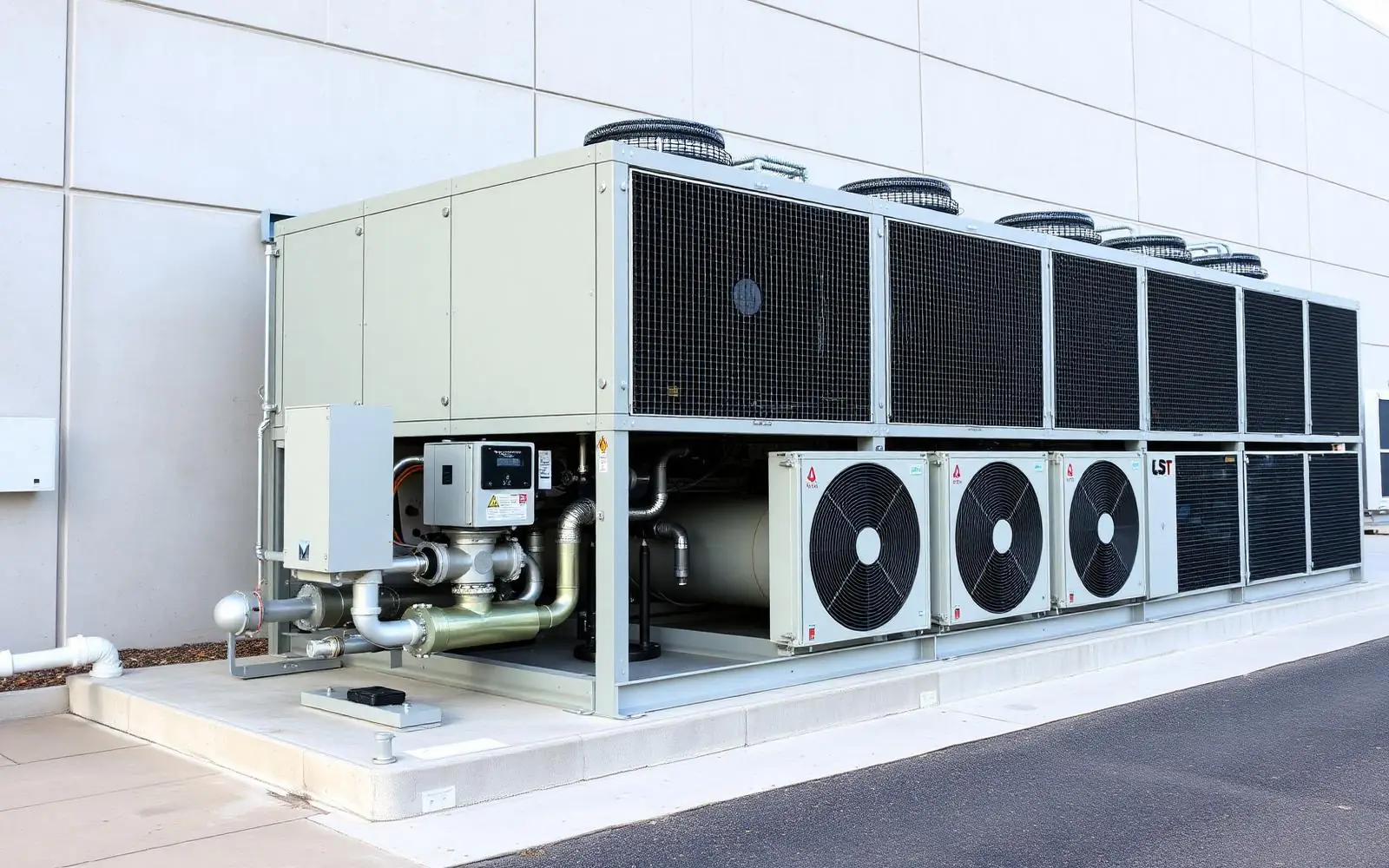
Industrial closed-loop chiller equipment outside a modern data center building

Economic impact

What Can a Data Center Mean for a Kentucky Community?

Actual economic impact varies substantially by project, county and agreement. These are the categories worth examining — with the specific numbers coming from the project's own filings, not from statewide averages.

Private capital investment

Large campuses represent private construction spending, not public expenditure. The scale varies widely by project phase and capacity.

Local property tax base

Capital-intensive facilities can add substantial assessed value to a county's rolls — subject to assessment practice and incentive terms.

School funding

Local revenue can reach districts through property, utility and occupational taxes, with the net effect shaped by the state funding formula.

Construction employment

Multi-year build phases employ skilled trades: electricians, pipefitters, ironworkers, operators and concrete crews.

Permanent technology jobs

Operations roles are fewer but typically pay above regional medians and often do not require a four-year degree.

Local contractors

Site work, mechanical, electrical, security and maintenance contracts can reach regional firms when bid access is real.

Infrastructure investment

Substation, transmission, water and road upgrades sometimes deliver capacity that serves other employers as well.

Community partnerships

Training pipelines, school programs and public facility contributions are most durable when written into an agreement.

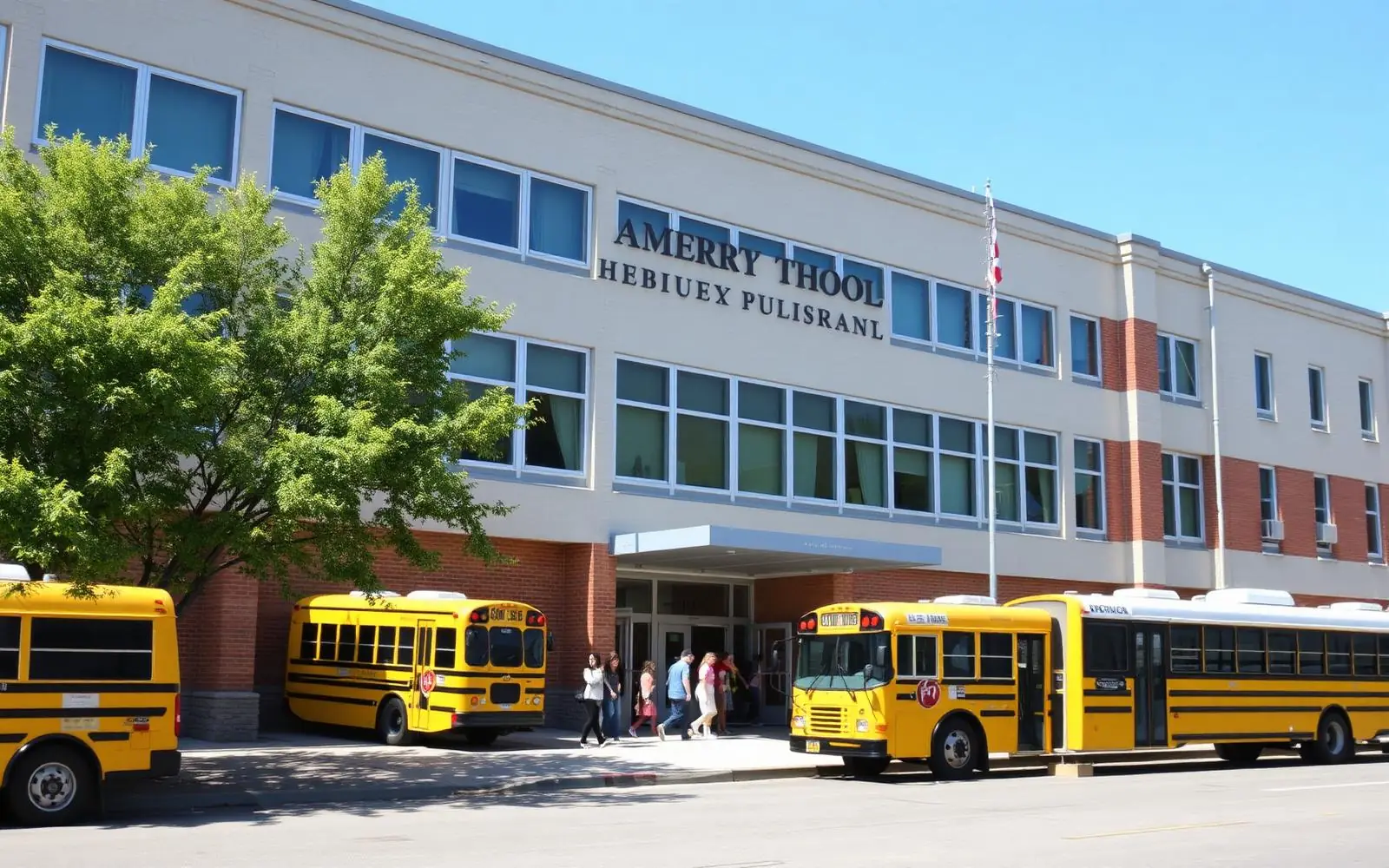
A Kentucky public school building with buses parked outside

Schools

Why Local Schools Matter in the Data Center Conversation

Property taxes, utility taxes, occupational taxes, PILOT agreements and other local structures can all affect what a district receives — and the effect differs by project and jurisdiction. In Kentucky, local revenue growth also interacts with the state SEEK funding formula, so the net change to a district is rarely the full local increase.

School impact estimator — in development

Estimated project value

Estimated local taxes

Estimated school impact

We are building this module with county PVA assessment practice and district tax rates so results reflect a specific jurisdiction. Every output will be clearly labeled as an estimate, with its assumptions shown alongside it.

Our standard

What Does Responsible Data Center Development Look Like?

Kentucky can compete for major technology investment and demand that it be done well. These are the conditions we believe every project should meet, and the checklist we apply when we examine one.

  • Ratepayer protections
  • Transparent communication
  • Early community engagement
  • Environmental review
  • Water planning
  • Noise mitigation
  • Local hiring
  • Infrastructure planning
  • Community partnerships
  • Long-term accountability

Briefings

Kentucky's Data Center Moment

Explainers and analysis from Kentucky For Data Centers on the projects, policy and infrastructure decisions shaping the Commonwealth.

All briefings

Data center fact check

Claims, Evidence, and What Depends on the Project

Most claims about data centers are neither entirely true nor entirely false — they are conditional. We separate what is well established from what depends on the specific project.

Claim · Electric Rates

Data centers always raise residential electric bills.

What we know

Rate impacts depend heavily on utility structure, infrastructure investment, rate design, generation requirements and regulatory protections. Where a large load pays the allocated cost of the infrastructure built to serve it, the effect on other customer classes can be neutral. Where it does not, existing customers can absorb costs.

What depends on the project

Power requirements, utility territory, generation source, transmission upgrades, contract term and the negotiated tariff approved by the Public Service Commission.

Claim · Water

Data centers consume enormous amounts of water.

What we know

Water use varies by an order of magnitude or more depending on cooling design. Closed-loop and air-cooled facilities use comparatively little; open evaporative systems use substantially more. Reducing water use generally increases electricity use.

What depends on the project

Cooling technology, local climate, water source, facility density, and whether the serving utility has treatment and distribution headroom.

Claim · Jobs

Data centers create thousands of jobs.

What we know

Construction phases can employ hundreds to thousands of skilled trades workers for a period of years. Permanent operations employment is much smaller relative to capital investment, though it typically pays above regional medians.

What depends on the project

Campus size, number of phases, operator staffing model, degree of automation, and whether local hiring commitments are written and reported.

Community

Your Community. Your Questions.

Data center development can represent billions of dollars in investment, but communities deserve answers before major projects move forward.

Ask a question. Suggest a topic. Tell us what you want investigated.

Follow Kentucky's data center boom.

Get major project announcements, policy developments, research, and community updates delivered to your inbox.